Episode Transcript
[00:00:00] Speaker A: You're listening to a podcast by Lance Lambert Ministries. For more information on this ministry, visit lancelumbert.org or follow us on social media to receive all of our updates.
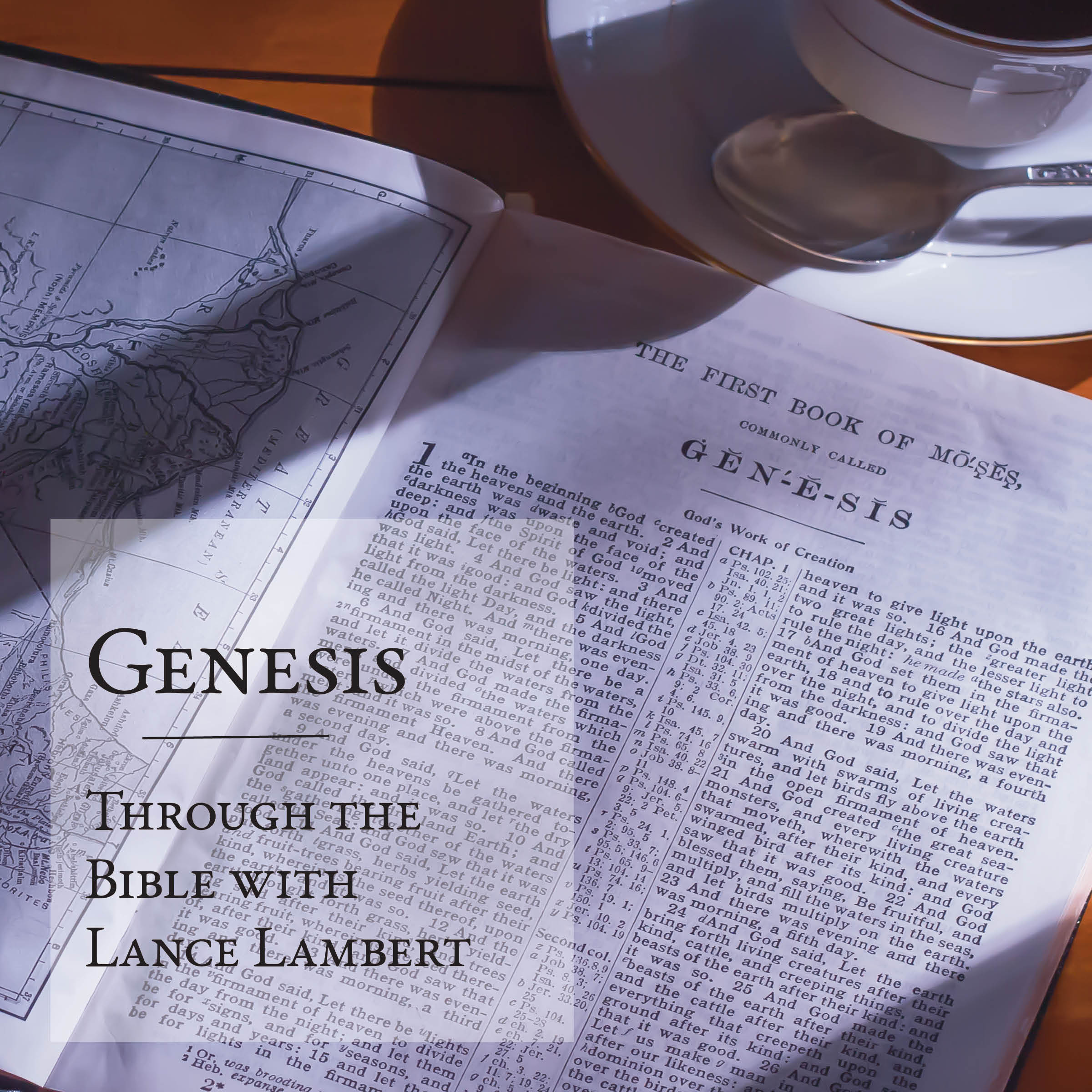
[00:00:12] Speaker A: Today we'll be listening to the first chapter of the audiobook for through the Bible with Lance Lambert Genesis Narrated by Michael Cross, this first chapter is a general survey of Genesis 1:3 and explains how the names of Elohim and Jehovah reveal God's heart and purpose in the creation of man. This audiobook is available today on Audible, Spotify or wherever you get audiobooks. Let's listen to Chapter one of through the Bible with Lance Lambert Genesis.
[00:00:43] Speaker B: Chapter one Genesis A General Survey.
[00:00:49] Speaker B: Reading the Word in Preparation for Study.
[00:00:53] Speaker B: Whilst it may be interesting and instructive to talk about the Bible, after all, we have only one end in view, and that is to study the Word itself. I would like to say now that we have reached this point, how very necessary it is that you should, without any coercion or persuasion from me, be reading in the week preceding as much as you can of what we are going to study on Friday. Otherwise, as I once did, you are only going to find the same as I have found.
I used to always say to myself, now I must read. I must read that chapter or that letter through. Then the night came, and of course whilst I gained quite a lot from that time, I was very sorry at the time that I had not read it then. I always used to say to myself, I will read it. I shall read it this coming week and get down to it, but never did so. It is by far the best thing to be quite strong and definite with ourselves in the week preceding and say, now I am going to put aside a certain amount of time this week to really read, even if I do not understand it, just to read it to get the background so that when we come to this time on Friday, we know something of the context.
Now you should have read the first three chapters of Genesis. We cannot this evening now read them together. We will read the first chapter of Genesis, because all the time I am going to be making references to these three chapters.
You really do need to know something of what is in them. I wonder if we could read together this first chapter.
[00:02:24] Speaker B: In the beginning God created the heavens and the earth, and the earth was waste and void, and darkness was upon the face of the deep, and the Spirit of God moved upon the face of the waters, and God said, let there be light, and there was light, and God saw the light, that it was good, and God divided the Light from the darkness. And God called the light day, and the darkness he called night. And there was evening, and there was morning one day.
And God said, let there be a firmament in the midst of the waters. And let it divide the waters from the waters.
And God made the firmament and divided the waters which were under the firmament from the waters which were above the firmament.
And it was so.
And God called the firmament heaven. And there was evening and there was morning a second day.
And God said, let the waters under the heavens be gathered together unto one place and let the dry land appear. And it was so.
And God called the dry land earth. And the gathering together of the waters he called seas. And God saw that it was good.
And God said, let the earth put forth grass, herbs yielding seed and fruit trees bearing fruit after their kind, wherein is the seed thereof upon the earth. And it was so. And the earth brought forth grass, herbs yielding seed after their kind. And trees bearing fruit, wherein is the seed thereof after their kind. And God saw that it was good.
And there was evening and there was morning a third day.
And God said, let there be lights in the firmament of heaven to divide the day from the night. And let them be for signs and for seasons and for days and years. And let them be for lights in the firmament of heaven to give light upon the earth. And it was so.
And God made the two great lights, the greater light to rule the day and the lesser light to rule the night.
He made the stars also.
And God set them in the firmament of heaven to give light upon the earth and to rule over the day and over the night. And to divide the light from the darkness.
And God saw that it was good. And there was evening. And there was morning a fourth day.
And God said, let the waters swarm with swarms of living creatures. And let birds fly above the earth in the open firmament of heaven. And. And God created the great sea monsters. And every living creature that moveth wherewith the waters swarmed after their kind. And every winged bird after its kind. And God saw that it was good. And God blessed them, saying, be fruitful and multiply and fill the waters in the seas. And let birds multiply on the earth.
And there was evening and there was morning a fifth day.
[00:05:29] Speaker B: And God said, let the earth bring forth living creatures after their kind. Cattle and creeping things and beasts of the earth after their kind. And it was so.
And God made the beasts of the earth after their kind and the cattle after their kind. And everything that creepeth upon the ground after its kind.
And God saw that it was good.
And God said, let us make man in our image after our likeness, and let them have dominion over the fish of the sea, and over the birds of the heavens, and over the cattle, and over all the earth, and over every creeping thing that creepeth upon the earth.
And God created man in his own image, in the image of God created He him. Male and female created he them.
And God blessed them. And God said unto them, be fruitful and multiply and replenish the earth and subdue it, and have dominion over the fish of the sea, and over the birds of the heavens, and over every living thing that moveth upon the earth.
And God said, behold, I have given you every herb yielding seed which is upon the face of all the earth, and every tree in which is the fruit of a tree yielding seed to you it shall be for food, and to every beast of the earth, and to every bird of the heavens, and to everything that creepeth upon the earth wherein there is life. I have given every green herb for food.
And it was so.
And God saw everything that he had made. And behold, it was very good.
And there was evening, and there was morning the sixth day.
[00:07:15] Speaker B: And then we will just read the first four verses of chapter two, because there should not be a chapter division there. Actually, chapter one really ends with verse four of chapter two.
[00:07:26] Speaker B: And the heavens and the earth were finished, and all the host of them. And on the seventh day God finished his work which he had made. And he rested on the seventh day from all his work which he had made.
And God blessed the seventh day and hallowed it, because that in it he rested from all his work, which God had created and made.
These are the generations of the heavens and the earth when they were created in the day that Jehovah God made earth and heaven.
[00:07:59] Speaker B: The Importance of the first three chapters of Genesis.
[00:08:04] Speaker B: There are two or three things I want to say. Generally, we are taking the first three chapters of the Bible because they are absolutely essential and elementary to every single thing within the Bible.
That is what most people fail to realize. There is not one major doctrine which does not in some way evolve from these three chapters. And it is probably the answer to the controversy which has raged over them.
It is these three chapters that are always called myths and fables which cannot be relied upon.
Modern science has shown that it is hopelessly incorrect and inaccurate, and so on. However, the point really is that within these three chapters we have everything. If we had no Bible, we have really everything. Within these three chapters, of course, what we have often said is that the Bible is progressive in its revelation. That is, as you go on, it reveals more and more and more. But everything is found in seed form. In these three chapters you will find the church, the Gospel, the cross, the Lamb slain, and God's eternal purpose all within these three chapters. You will find everything within these first three chapters of the Word of God.
[00:09:20] Speaker B: The uniqueness of the first three chapters of Genesis.
[00:09:26] Speaker B: The first thing I want you to note about these chapters is that their ancient character in literary method, style and vocabulary is quite unique.
When you are dealing with the first three chapters, in fact, actually the first almost 12 chapters of Genesis, you are dealing with one of the oldest documents in world history.
And as we would expect, the vocabulary, the style and the method are all absolutely within keeping to their age.
You will remember that many people a hundred years ago thought that writing was not even known in the days of Moses. They now believe that writing was known thousands of years earlier than Moses.
It is quite feasible. Indeed, I think it is more than feasible. It is probable that the first chapter of Genesis, up to chapter two, verse four, is the earliest written document in history.
Certainly everything about it is ancient.
As you read through the first three chapters of Genesis, you will not find one really hard word. They are all, generally speaking, one or two syllable words, quite simple.
Its simplicity is quite remarkable.
Another thing that is also very interesting is the style. It is terse. In the Hebrew, it is even more terse than in English things such as verse three. God said, let there be light, and there was light.
In Hebrew it is just let light be and light was.
It is as simple and terse as that.
That is the style of these three chapters. If you read right through them, you will find them terse and simple and direct.
[00:11:04] Speaker B: Another remarkable thing about these chapters is their literary method. One of the most ancient Hebrew methods was what is called parallelism. That is, it was a form of poetry. There was a little introduction followed by three thoughts, and then parallel with them, another three thoughts.
Here you have that method. First of all, in the first two verses there is an introduction. Then you have three days, 1, 2, 3. Parallel with them you have another three days and then you have the conclusion.
After that you have what is called the colophon. In ancient literature, particularly with tablets, they had a colophon which just said at the end who was the writer or authority.
And here we have it in verse four.
These are the generations.
That word generations is the word Toledoth in Hebrew, which means history or book.
And indeed, in The Septuagint version, it is translated, this is the book of the history of the creation of the heavens and the earth, and the author is the Lord God. Evidently, the revelation was committed to man by the Lord himself.
Jewish tradition tells us that this revelation was given to Enoch and that he was the first man, according to Jewish rabbis, ever to write, and he committed it to writing.
Now, when we take the whole book of Genesis, we shall be going into this question of tablets, clay tablets and early forms of writing and so on, particularly in the book of Genesis. I just want to mention that to you. That is the first thing.
[00:12:44] Speaker B: The timelessness of the first three chapters of Genesis.
[00:12:49] Speaker B: There is a second thing I want to mention to you. Have you ever realized the timelessness of these three chapters? One of the common and rather stupid remarks that we often hear made is, oh, it is unscientific. Science contradicts these things. I cannot believe the beginning of the Bible. It is not scientific.
But just supposing that the first three chapters of Genesis had been put into scientific terminology, no one all through the history of man would have been able to understand it until the 20th century.
And one of the most remarkable things about these three chapters is the way they have been set forth in a way that every generation from the beginning have been able to understand.
The very ancient peoples always spoke in a symbolical and in a very, very simple and direct way.
I have been fortunate and blessed in one way, to study classical Chinese. And in classical Chinese, everything is terse and simple. The earlier you go, the older the manuscripts, the more simple and the more direct they are. It might all seem very mythical, but it is all put in very, very simple form.
These three chapters of Genesis have survived the whole history of humanity and in every generation have been understood even by the gardener. Isn't that wonderful? And yet, if they had been put in scientific terminology, it would have sealed this book up entirely. No one would have understood it until the 20th century, and then only by certain scientific minds who were versed in all the scientific terminology and the ideas there. That is something I find very, very interesting and very, very wonderful.
[00:14:37] Speaker B: The creation story.
[00:14:40] Speaker B: Another thing I want to point out is that the creation story is preserved either in a fragmentary form or in a very much more embossed form in nearly every race and nation in the world. That is one of the most remarkable things.
The Chinese, of course, have this story as well as the story of the Flood.
It is much more embellished and embossed than the biblical account.
Much more has come into it with gods and goddesses all over the place. In Chinese mythology, the story of the flood has eight people being saved. They went to a boat and were saved in a flood.
Inca tradition also has the story of creation very much the same as this. It also has the story of the flood.
And we could mention many, many other nations that have this story in their history as well as.
The interesting thing is that the only clear and full account, indeed the most practical account, is the account that we have in the Bible.
All the other great accounts, the Babylonian, the Chinese, the Incan, and many other great civilizations have within them a lot that you just cannot swallow. It is quite obviously mythological. I just say that also in passing.
[00:15:57] Speaker B: Two accounts of creation.
[00:16:00] Speaker B: One of the great controversies that has centered upon Genesis has been the supposed two contradictory accounts of creation. And if you have read the first three chapters, you will have seen it quite clearly. The first account in Genesis 1 seems to contradict the account in Genesis 2.
In Genesis 1, everything is created and ends with God creating man and woman.
Then we have a duplication in Genesis 2, which seems as if the whole story is retold from a completely different source.
And the modernists will tell us that different words are used and different titles are used for God, and the whole context is different.
Man is made first, and then all the other things, the beasts, the flowers, the plants and everything else come after him. And. And when all that has happened, woman is created. It is entirely a contradiction to Genesis 1. There are two entirely different accounts.
And they say that Moses was a somewhat ignorant man, and he, to put it crudely, hashed up his work of editing. Instead of ruling out everything and making two accounts into one thoroughly good account, he very superficially glossed over them and left these two accounts there.
And even more amusing, Genesis 3, verses 1 to 8 is the same as chapter 1.
So this account somehow got pushed in again after chapter two.
So those are some of the ideas that have surrounded these chapters.
As we look at these three chapters, what is the key?
Why has the Holy Spirit duplicated the account of creation in chapter two? And what is the key to this obvious use of different words?
Why does chapter one use certain words and chapter two use other words? What is the key to it?
Well, if you get this clearly in your mind, I think it will help you greatly.
Genesis 1 is the fact of creation. From whence and how? From where did it all come? How did it come from? Where did this universe come from? Where did man and woman come from? Where did life come from? Where did this whole Design and harmony come and how did it come into being? What was the method?
Can you give me a clue to the method? Genesis 1 is the clue to where it came from and how it came into being. It is the fact of creation.
Genesis 2 has an entirely different object, and that is why the whole thing is turned round in a different way with a meaning.
Genesis 1 is the actual process of creation, the order, if you like. Genesis 2 is the purpose of creation, or unto what? And why? Where is it all going and why is it all here? What is the goal? And if that is the goal, why that is Genesis 2.
Genesis 3 is the fall of creation, the explanation of the present. And the answer.
It is very wonderful. The answer is in Genesis 3. The answer is there, the explanation of the present.
In other words, supposing you are in a kindergarten and you are asking questions. You say to your where does this world come from? Then he answers you. Then you ask another question. But how?
You are answered, well, what is the purpose of it? What is the aim?
You are answered, but why?
And you are answered.
Then you may well turn around and say, but that doesn't tie up with what we have at present, what has happened since.
And Genesis 3 is the explanation of the present, what has happened, and God's answer to what has happened is that clear.
[00:19:55] Speaker B: The Names of God in Genesis 1:3.
[00:20:00] Speaker B: Elohim the next thing I want you to note is the titles or names that are used for God in these three chapters, because in their use is again a key.
In Genesis 1 the name Elohim is used absolutely exclusively. We should get an understanding of this name because it appears all the way through Scripture, in the beginning God and right the way through Genesis 1. This is used exclusively for God. Elohim. Its root meaning is the mighty or the strong one, and it always brings into view the God of creation. Whenever Elohim is used, it is always bringing into view God as the God of all creation. You get its form used in many other names, such as El Elyon, the Most High.
Daniel uses that always, or El Shaddai God, the Almighty. Then you get it in El Bethel, God of the house of God.
So we find it all the way through El God, Elohim in full God.
We will come to that again in a moment because it is very, very wonderful.
We find Elohim used again and again and again. In Genesis 1 God said God called, God divided. God did this, God did that. God the God of all creation.
It brings into view the majesty, the grandeur, and the immensity of God.
Now mark that. Because in the 20th century, that is what is lacking. The majesty, the grandeur and the immensity of God.
Even among evangelicals, this is the thing that is sadly lacking. Our God is so small.
There is no longer that sense of the greatness of God, the sovereignty of God, the almightiness of God. It is a tremendous thing.
The whole spirit of the 20th century is to belittle God and make him into some little departmental being that is not really sovereign and cannot really do anything he wants to do.
But Elohim speaks of the mightiness and the immensity of God.
[00:22:17] Speaker B: Jehovah In Genesis 2, the name Jehovah is used exclusively.
Jehovah God. The two are brought Yahweh, Elohim, the Lord God, Jehovah God or Jehovah Elohim.
We do not even really know how the name is pronounced because the Jews were never ever allowed to utter it. You always had to be silent, pass it over, or substitute another word for it. So we do not even know how it was pronounced, but we think it was pronounced Yahweh Jehovah this name, wherever you find it in Scripture, speaks of the intimate God of redeeming love, the name by which he wanted to be known in the most inner, intimate marriage bond between himself and his people. His he did not want them just to know him as Elohim. He wanted his own to know him as Jehovah. And there is something so very, very wonderful about the name Jehovah. You can think of it as the covenant God, the covenant keeping God, the God who has bound himself to his people by love, by his own faithfulness.
He has come down to their level and bound himself to them. The great God of creation has come right down to intimate, personal, direct level and bound him to each of us as his people.
And he says, I will love thee with an everlasting love.
Do you see? That is Jehovah. And it brings into view the grace and the love and the mercy and the faithfulness of God.
Now whenever you read Jehovah in your Bible, think about that. It means that when the Lord says, I am Jehovah, he is always trying to make them think. You see, when he speaks to them as El Shaddai, he is trying to tell them something else. But when he speaks to them as Jehovah, he is trying to awaken chords of love in his people.
He is saying, I am the faithful one. I am the one who is full of love for you and mercy toward you and grace for You.
The wonderful thing is, and this might surprise you, that the root meaning of Jehovah is to be I am.
Do you remember what he said to Moses? I am. That I am. Go and say that I am has sent you.
I am has come down to us as Yahweh, as Jehovah.
What does it mean? God wants to link his eternity, his unchangeableness, to the fact of his faithfulness.
That is very wonderful.
In other words, he is not faithful for an age. He is not faithful for ages. He is faithful for eternity.
The root form. The root meaning of Jehovah is unchangeableness. And he has linked that with grace and love and mercy and faithfulness.
We would have thought that the unchangeableness would have been linked with the God of creation, wouldn't we? But no, that is where we are wrong.
Creation is more transient than the mercy and the love of God. The love of God in God's sight is the eternal thing. This creation is the transient thing.
[00:25:40] Speaker B: Genesis 1 uses Elohim. Genesis 2 uses Jehovah Elohim, combining the God of creation with the God of redeeming love.
That is very wonderful, isn't it?
And then something that you might want to in Genesis 3, when the devil comes to Eve, he never mentions God by the name Jehovah. Isn't that interesting?
Of course, the dear old modernists have got their own theories for this. They have decided that there are the E documents and the J documents and the P documents and all this kind of business.
They try to get around what the Holy Spirit is saying by saying that these were written by all different kinds of people, that these are fragments brought together in a very poor way.
However, Genesis 3 begins like now, the serpent was more subtle than any beast of the field which the Lord God or Jehovah God had made. He said unto them, yea, hath God said all the way through the serpent speaks of him just as God, the God of creation, Elohim.
And do you know the tragedy when Eve replies? She says, for God doth know.
That was the beginning of the fall. It was the name. It is rather interesting in that way. The devil was going to keep off the redeeming side of God's nature with a very real purpose in view. I hope you realize that he hoped that when the woman had fallen, she would be so terrified that she would never recover from it.
But the wonder of it is that God made Himself known to them as the redeeming God of love, even though he had to put them out of the garden, he made Himself known to them as the Redeeming God.
So in Genesis 1 we have Elohim. In Genesis 2 we have Jehovah.
[00:27:38] Speaker B: Bara, Asa, and Yatsar.
[00:27:43] Speaker B: Now I want you to note the words create, make and form.
The first one is the Hebrew word bara and is used three times in Genesis 1. The first time is in verse 1. In the beginning, God created the heavens and the earth.
Verse 21. And God created the great sea monsters and every living creature that moveth wherewith the waters swarmed after their kind, and every winged bird after its kind.
Verse 27. And God created man in his own image. In the image of God created He Him. Male and female created he them.
It is not quite known from where the word bara to create came originally. Possibly it came from a root word which meant to cut off, to cut off a piece and then to work on it.
But in this context, it always means a definite sovereign act of creation. In other words, whenever the word bara is used, it means that God is doing a new thing. It has no relationship to what we see. And that is very important.
This word is used three times. God created the heavens and the earth without anything pre existing he created.
It was an act of sovereign creation. God created the sea monsters and the things that swarm in the water and the birds, the winged creatures.
That is the beginning of animate life.
The word is used again. Creation. God created.
And then when it comes to man, human life, God created. It was a sovereign act of creation. It was absolutely sovereign. In other words, it was by the word of God and it was sovereign. That is the method. It was sovereign. This word is used elsewhere in the Word, but in these three chapters it is only used in Genesis 1. And these are the three times.
The second word that is used and is used approximately 2,500 times in the Old Testament is the word asa.
And it means nearly everything. Quite honestly, to know exactly what it does mean, you have to rely on context, like you do with many ancient languages. But here it means to make, to do, or to fashion. And this word asa always means you are fashioning something which already exists.
That is very important.
In other words, you are working on something which is already there.
Creation. The word create or bara means either you bring something out of nothing or you are doing something with the material without any relationship to what it was before.
In other words, no evolution. It is a sovereign act.
Asa is quite different. It is taking something like clay or something like that and molding it, fashioning it. There may be a process in it. It is very, very wonderful. This word is used in verses 7, 16, 25, and 31 of Genesis 1.
And then this is the wonderful thing. Genesis 2 has a different word. It is the word yazar. And this word means to form or to fashion. It is generally used of the potter and the clay. To form or to fashion.
Yatsar is used in Genesis 2, verses 7, 8, and 19.
The Lord God formed man out of the dust of the ground.
This word yatsar is really very, very thrilling to investigate. It means in some connections, not here, but in some connections, to preordain or to devise or to plan.
Today, as you know, Arabic is the only modern language that in any way corresponds to ancient Hebrew. And in Arabic today the word yatsar is still used for covenant or contract.
And that is very, very wonderful.
Now let's bring it all together. In Genesis 1 you have Elohim, the God of all creation, his immensity, his grandeur, his majesty. And that word used in Genesis 1 is Bara. God creates out of nothing. It is sovereign activity.
Then the word asa is also used. The God of creation is fashioning and molding. It is method. That is the point there. But in Genesis 2, when you have Jehovah in view, it is the potter and the clay. He is planning something. He is purposing something. He is, as it were, contracting something. He has something in mind, and he is working it to the end.
He is fashioning something. It is very, very wonderful how the Holy Spirit has chosen the words of these three chapters.
We have those two accounts of creation, and they have been carefully worded.
Thus in the fact of creation you have got Elohim acting quite sovereignly. Even when the word asa is used, it still relates to God's sovereign activity. The birds and the fish and the sea monsters, which we may look at a little more closely, may well have evolved. There may be a process in their creation which is within the word. The word suggests it implies it.
However, behind the process is creation. The word bara is used of it. In other words, it is still God.
Whatever the method that is used in Genesis 1 for creation in this universe, it is the God of sovereign activity that is behind it.
Whether he is bringing something into being that was never there before as the heavens and the earth, or whether he is bringing out of the waters, causing the waters to swarm with swarming things. The word literally means teem with teeming things, or whether he is causing the winged things, which are insects and birds of every kind, to Come into being, maybe out of the water. It is a possibility that it had something to do with the water to begin with, or whether it is the sea monsters, or whether he is doing a new thing altogether. As with man. He is the God of sovereign activity. He is doing a new thing quite differently.
He takes the clay of the ground and molds it and then breathes into it. And man becomes a living soul.
[00:34:23] Speaker B: Elohim, a plural noun.
[00:34:27] Speaker B: There is another thing I want you to know. This word Elohim is very, very interesting. It is a word which is plural.
Now, isn't that wonderful? It is a thing the rabbis could never get over. They could never understand it. The rabbis always got over it by saying, well, it must mean that God had fellowship with the angels, because Elohim is in the plural and really is a plural noun. It is, as it were, gods, and yet not gods. The idea is a plurality in unity.
Well, isn't that the Trinity? And we find it in the first three or four words of the Bible.
In the beginning, God.
Now, here is another wonderful thing. This noun Elohim is always used with a verb in the singular.
The thought is that the Trinity is moving in unity all the time.
In the beginning, God created as one person. The rabbis could never understand this, of course, when they came down to Genesis 2. The whole Trinity is there.
Chapter one, verse one says, in the beginning, God created.
The word for God. Here is, as I have already said, in the plural, and created is in the singular.
Verse 2 says, the Spirit of God moved upon the face of the waters.
The Spirit of God moved or hovered upon the face of the waters.
We find the third person of the Trinity mentioned there.
Now look at verse 26.
God said, Let us make man in our image and after our likeness, and let them have dominion.
That is very remarkable, isn't it?
Let us.
[00:36:16] Speaker B: And then in chapter three, verse 22, the Lord God said, behold, the man has become as one of us to know good and evil.
The rabbis could never understand that. And they always said it was God talking with the angels and saying, let us make.
But surely that is not quite right. The angels did not actually join a sovereign equality with God in the creation of this world, did they?
They are themselves a creation.
So here is the first and earliest inference to the Trinity. God the Father, God the Son, and God the Holy Spirit. They are working here together.
The name Jehovah is a name that is peculiarly associated with the Lord Jesus. And the Tree of Life, of course, is again something that is associated with the Lord Jesus.
He said, I am the life. I am the true vine.
A lot that is associated with this tree of life relates to the garden.
So we have there the whole Trinity in covenant together. In the creation of the universe and the creation of man.
We have it all.
[00:37:29] Speaker B: God's eternal purpose.
[00:37:32] Speaker B: Thus, in these first three chapters of Genesis, we. We have God the Father, God the Son and God the Holy Spirit. We also have the eternal purpose of God.
Now, where do we find the eternal purpose of God in these three chapters?
First of all, we see it in the tree of life in the midst of the garden. The tree of life is associated with the eternal purpose of God.
Do you know what it means?
It means a humanity in utter dependence for its life and the fulfillment of its responsibility on Christ.
That is, God's purpose was that humanity could only live, really live with a capital L, not this living death. Insofar as humanity is utterly dependent on Christ and it could only fulfill its responsibility to have dominion over all things insofar as it was dependent on Christ.
That is the eternal purpose of God. And it is summed up in the man and the woman, the institution of marriage.
Many people think that marriage is something that was instituted for our benefit.
Of course, it was instituted for the reproduction of humanity. But primarily it was to show forth in picture form the eternal purpose of God.
Marriage is the symbol of the eternal purpose of God. Because the end is humanity in union with God, in utter union with God and in utter dependence on God.
The woman was taken out of man's side and fashioned. In other words, she was not formed as man. She was taken out of man in the same way that humanity is, as it were, taken out of Christ.
That is the thought by eating the tree of life, she would become incorporated into Christ in union with Christ, in such a union of dependence and mutual fellowship and love, that the whole question of responsibility for the universe was to be fulfilled.
You may sum up the eternal purpose of God in two Christ the center and sum of all. And secondly, a people in union with Christ.
That is the eternal purpose of God. Christ the sum and the center, the centre and sum of all. And then a people in union with Christ.
[00:39:57] Speaker B: The probation and the fall.
[00:40:00] Speaker B: In these first three chapters you have the probation of man and the fall. That is, something awful happened and the whole thing was wrecked from the beginning. But, mind you, wrecked in such a way that even when we come to know the Lord, our greatest battle is with our own deceived selves.
Something happened at that fall which has left an amazing mark so intricate and so deep is the work of Satan in humanity. It can be seen in every way.
It can be seen in the absolutely spontaneous distrust of God. And that is one of our biggest battles when we come to the Lord. A quite spontaneous distrust of the Lord. It can be seen in the way that humanity was blinded utterly to God's character, quite blinded to what God is like.
And then it can be seen in every single way in man. The whole relationship between a husband and wife has been smashed beyond recognition. So that by the very curse itself, the whole thing became perverted and reoriented. It became a thing that binds people, chains people and fetters people all their lives.
Corruption came in there. Man became a slave to the thing over which he should have had dominion.
By the sweat of his brow he had to earn his living. And the ground, instead of being flexible and pliable, yielded thorns and thistles and briers. Everything got on top of him. So that man is now under it all, absolutely under it. That is all in the first three chapters of Genesis. And, oh, if people would only read them, what an understanding they would come to of themselves and of what Satan has done in us.
But thank God, there is not only the probation and the fall in those first three chapters. There is also the cross and the Lamb slain. Those are all in the first three chapters of Genesis.
[00:41:56] Speaker B: God rebukes Satan.
When the fall came, you would have thought that God would have turned round and blamed man, blamed woman. But no. The first words God had of rebuke were for Satan. And God said these wonderful I will put enmity between thee and the woman, and between thy seed and her seed. He shall bruise thy head, and thou shalt bruise his heel.
Of course, this is a very, very old reference, but Eve knew what he was talking about. And it is a very wonderful thing that a bit later, Adam called Ishshah taken out of me. He called her Eve, the mother of all living.
That is very, very wonderful, because Adam had come into the realm of death. But he called Eve the mother of all living. Do you know why? It is because she said, I have gotten a man with the help of the Lord.
She really wondered, I think, at the very beginning as to whether her firstborn was going to be the deliverer there. And then, as we all do, we like to believe it is going to be right within our lifetime.
Eve really wondered whether this was the Messiah. Straight away.
[00:43:09] Speaker B: The Lord's promise.
What was the Lord's promise? He said the most amazing thing. He said that humanity from henceforth was to be divided into two streams. The seed of the serpent and the seed of the woman.
What an awful thing that is. The seed of the serpent and the seed of the woman.
The seed of the woman is what we call the good seed or the godly seed. The seed of the serpent is what we call the evil seed or the bad seed. It began right there.
Cain was of his father, the devil. He was of the bad seed. Abel was of the good seed. And so was Seth, who replaced him. You remember, Cain slew Abel.
Here we have got two great streams of humanity.
One line comes from Enoch, Noah, Terah, Abraham, Isaac, Jacob, Joseph, Moses, and so on. Right the way down to the Messiah.
On the other line, you have got the evil seed. It is a terrible story.
Cities come into being as a product of the evil seed. Cities were a product of the evil seed. And music and murder, fornication and adultery.
Every kind of evil came in as the seed of the serpent. We are all born naturally as the seed of the serpent. Which is the most terrible thing.
But we can all become the seed of the woman.
Isn't it a wonderful thing, as someone has said that there at the very beginning was the virgin birth.
Not the seed of man, but the seed of the woman. The seed of the Holy Ghost.
[00:44:50] Speaker B: The Cross and the Lamb.
[00:44:53] Speaker B: I have just one other thing to say. And it is all in these three.
The Cross and the Lamb.
Where is the cross?
I will put enmity between thy seed and her seed.
And that is the story of humanity. The violent hatred of the bad seed for the good seed. Such a hatred as would blot out the good seed whenever it is possible and destroy it.
And that has always been the way.
But listen to this.
He shall bruise thy head, and thou shalt bruise his heel.
What does that mean?
It means that the cross, as it were, was the smashing of Satan's head. And all Satan could do was bruise the heel of the Messiah.
In other words, the death of the Lord Jesus is looked upon as the bruising of his heel. Because he rose again.
However, the cross is looked upon as the slaying of Satan, the decapitating of Satan. His head was smashed, and all he could do was bruise the heel of the Messiah.
That is the cross. And it is promised there in Genesis 3.
[00:46:03] Speaker B: God's covering for man.
[00:46:07] Speaker B: And then, of course, the most wonderful of all is verse 21.
The Lord God made for Adam and for his wife. Coats of skin and clothed them.
This is very, very wonderful. The wonderful fact is that in Genesis 3. We have the beginnings of something which has become woven into our old nature.
Isn't it a strange thing that as soon as Adam and Eve fell, they became self conscious?
It is rather unpleasant to talk about, but that was one of the great marks of the fall.
Actually there is a good deal more that happened by the fall more than self consciousness, which I leave you to find out there in the word.
[00:46:49] Speaker B: They went further than that. They went and stitched themselves aprons of leaves. Well, we may think that is very commendable. Having suddenly discovered that they were naked and become extremely self conscious, they stitched themselves aprons of leaves. And why didn't the Lord sort of say, that is most commendable of you. You have covered your sins, but the fact is that now they were empty and aimless and miserable. They had lost the glory, they had lost their original state and condition. But do you know what the Lord did? He took them and he made them clothes of skin.
Some people rather foolishly say how unjust and severe God was with Cain because he brought the fruits of the ground, whereas Abel brought a little lamb, the firstling of the flocks. Abel was accepted and Cain was rejected. So people say. It seems a bit unfair, but the whole point was there could have been nothing more vivid in the mind of Adam and Eve than this. When they had made themselves clothes of leaves, God as it were, undressed them again and gave them clothes of skin.
This means that no natural self made covering can possibly give us access before God.
The only thing that can cover us is the death of another.
With leaves there was no death, but with skins there was the death of a lamb and the blood of a lamb.
Apart from shedding of blood there is no forgiveness.
Hebrews 9:22b.
So their sin was forgiven and covered. And although God put them out of the garden, he did so out of grace.
[00:48:35] Speaker B: Now we will conclude this general survey of the first three chapters of Genesis. We will take Genesis 1 in a more intimate way and in a bit more detail in the next chapter.
[00:48:47] Speaker A: May you know the tender love of the God who created the world. May you trust in his sovereignty. May you know the deep, deep love of Jesus.